Finding a skincare manufacturer in China is easy. Finding one that understands your brand, your product expectations, and your business model is a different challenge.
China has become one of the world’s most important cosmetics manufacturing centers. From large-scale ODM groups developing products for established international brands to specialized OEM factories supporting emerging beauty businesses, the country offers manufacturing options for almost every type of skincare project.
But not every factory is the right partner for every brand.
A manufacturer producing millions of sheet masks each month may be an excellent choice for a mass-market beauty company, yet less suitable for a startup launching three custom serums. Similarly, a factory with advanced formulation research may be attractive for an innovation-led brand but unnecessary for a straightforward private label moisturizer.
For international buyers, the real challenge is understanding what each manufacturer does well.
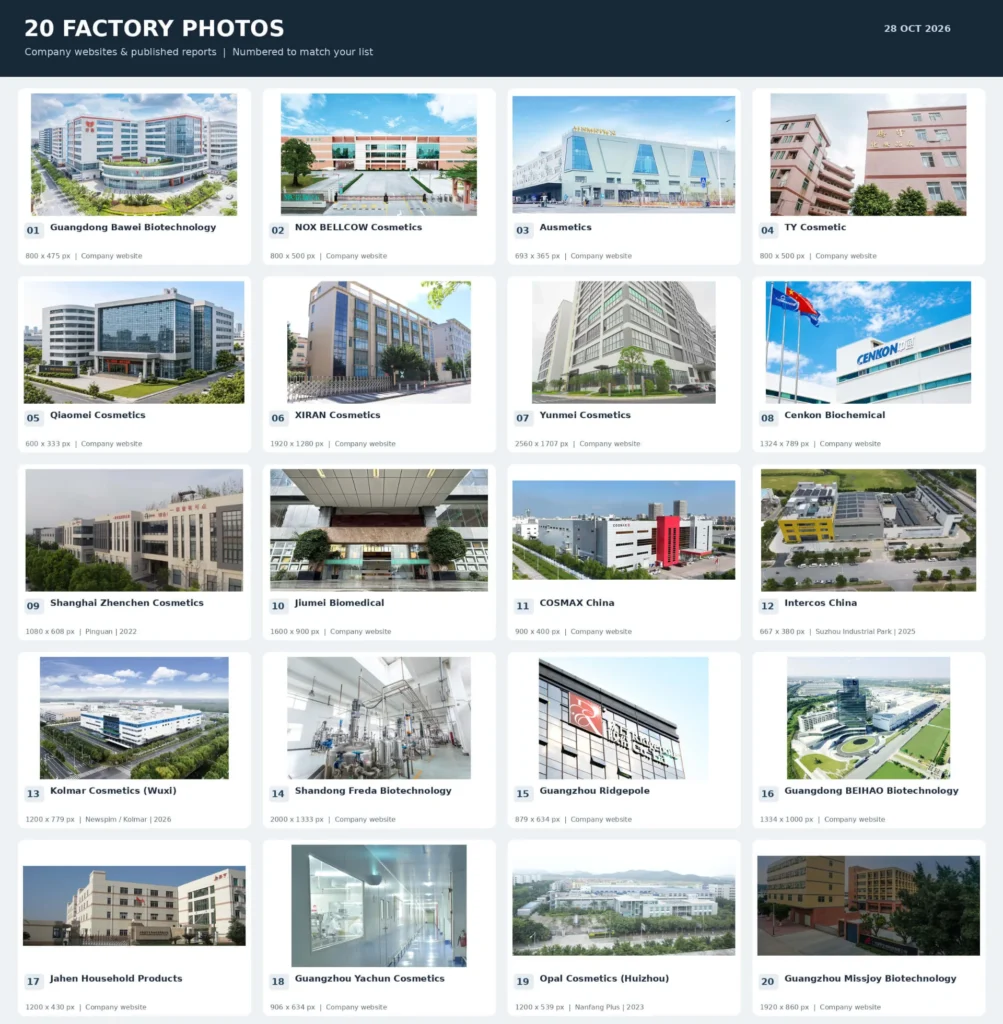
This guide introduces 20 skincare manufacturers operating in China, covering their manufacturing capabilities, product expertise, research strengths, and potential suitability for different beauty businesses.
Rather than treating all factories as interchangeable suppliers, we focus on the differences that matter when choosing an OEM, ODM, or private label skincare partner.
How We Selected These Skincare Manufacturers
The companies featured here represent different segments of China’s skincare manufacturing industry, including large ODM groups, established OEM factories, and specialized manufacturers.
Our selection considers six practical factors:
- Manufacturing capabilities: Established production facilities and experience with cosmetic manufacturing.
- Product specialization: Expertise in skincare, facial masks, body care, or related personal care categories.
- Research and development: Formulation capabilities, technical teams, and evidence of product innovation.
- Quality management: Manufacturing standards, testing processes, and relevant certification information.
- Customization services: Ability to support OEM, ODM, private label, packaging, and product development.
- Suitability for international brands: Experience or capabilities relevant to overseas beauty businesses.
The following is a curated industry guide, not a numerical ranking of factory quality. Information is based primarily on manufacturers’ published materials and other publicly available sources reviewed through October 2026. Production capacities, certifications, customer counts, and commercial terms should be verified directly before placing an order.
Top 20 Skincare Manufacturers in China: Quick Comparison
| Manufacturer | Location | Main Strength | Suitable For |
|---|---|---|---|
| 1. Guangdong Bawei Biotechnology | Guangzhou | R&D and efficacy testing | Established skincare brands |
| 2. Nox Bellcow Cosmetics | Zhongshan | Facial masks and volume production | Mask-focused brands |
| 3. Ausmetics | Guangzhou | Skincare and personal care development | Growing international brands |
| 4. TY Cosmetic | Guangzhou | Private label skincare and haircare | Startups and importers |
| 5. Qiaomei Cosmetics | Guangzhou | Multi-category personal care | Brands expanding product lines |
| 6. XIRAN Cosmetics | Guangzhou | OEM/ODM skincare and packaging solutions | Emerging and growing beauty brands |
| 7. Yunmei Cosmetics | Guangzhou | Skincare development and international projects | Overseas skincare businesses |
| 8. Cenkon Biochemical | Guangzhou | Proprietary formulations and R&D | Brands seeking differentiated products |
| 9. Shanghai Zhenchen Cosmetics | Shanghai | Makeup and skincare manufacturing | Established beauty brands |
| 10. Jiumei Biomedical | Guangzhou | Skincare production and documentation | Export-oriented private label brands |
| 11. COSMAX China | Shanghai / Guangzhou | Global ODM and formulation innovation | Large international brands |
| 12. Intercos China | Suzhou / Shanghai | Premium cosmetic innovation | Premium beauty brands |
| 13. Kolmar Cosmetics (Wuxi) | Wuxi | Korean ODM technology and quality systems | K-beauty-inspired brands |
| 14. Shandong Freda Biotechnology | Jinan | Hyaluronic acid and biotechnology | Science-led skincare brands |
| 15. Guangzhou Ridgepole | Guangzhou | Botanical skincare and formulation innovation | Natural and functional skincare brands |
| 16. Guangdong Behao Biotechnology | Foshan | Facial mask materials and manufacturing | Mask-specialist brands |
| 17. Jahen Household Products | Fujian / Jiangsu | Cosmetics and packaging integration | High-volume personal care brands |
| 18. Guangzhou Yachun Cosmetics | Guangzhou | Professional skincare and OEM/ODM | Salon and professional beauty brands |
| 19. Opal Cosmetics (Huizhou) | Huizhou | Body care and haircare manufacturing | Personal care brands and distributors |
| 20. Guangzhou Missjoy Biotechnology | Guangzhou | Skincare formulation and OEM/ODM | Private label and functional skincare brands |
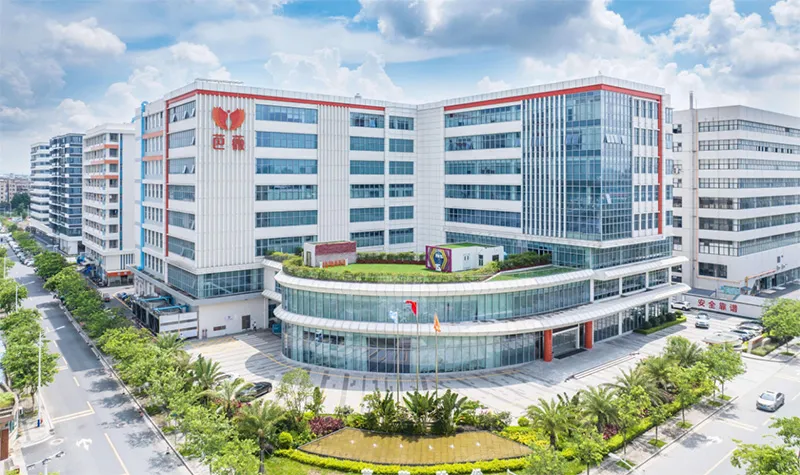
1. Guangdong Bawei Biotechnology Corporation
Location: Guangzhou, Guangdong
Specialization: Skincare, facial masks, efficacy testing, OEM/ODM/OBM
Website: baweicosmetic.com
Guangdong Bawei Biotechnology is an established Chinese cosmetics manufacturer with a strong focus on product development and manufacturing.
Founded in 2006, the company has expanded its capabilities across facial skincare, masks, haircare, and makeup. Bawei was listed on the Beijing Stock Exchange in March 2024, making its corporate information more accessible than that of many privately held cosmetics factories.
One of Bawei’s distinguishing features is its emphasis on formulation research and product efficacy testing.
Through its affiliated testing business, Guangdong Youzhi Testing Technology, the company offers services related to product safety and efficacy evaluation. This can be valuable for brands developing products with performance-driven positioning, where marketing claims need supporting evidence.
Bawei also reports quality management systems and manufacturing certifications covering cosmetics production.
Why brands may consider Bawei: Its combination of manufacturing, formulation development, and testing makes it worth investigating for established brands planning multiple skincare products or long-term development programs.
What to check: Ask about product-specific MOQ requirements, development charges, formula ownership, and whether relevant efficacy testing is included in the quotation.
2. Nox Bellcow Cosmetics Co., Ltd.
Location: Zhongshan, Guangdong
Specialization: Facial masks, skincare, wet wipes, ODM
Website: hknbc.com
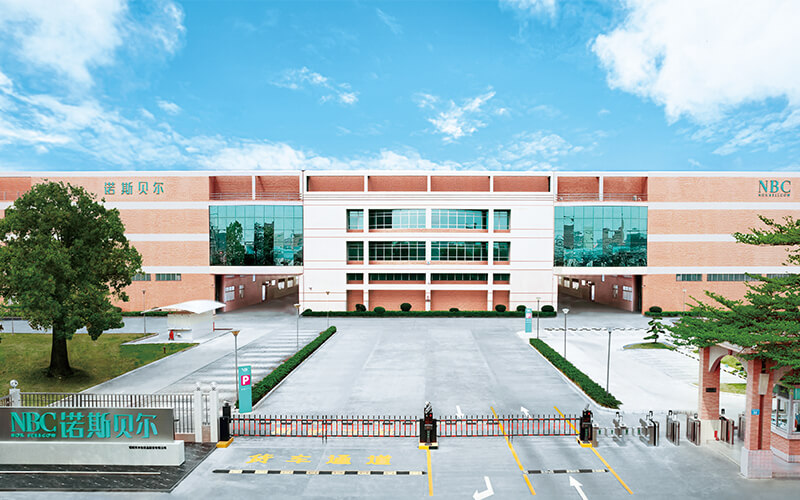
Nox Bellcow is one of China’s better-known cosmetics ODM manufacturers, particularly in the facial mask category.
Established in 2004, the company has developed manufacturing capabilities covering sheet masks, clay masks, freeze-dried masks, and other skincare products.
For a brand planning to build its identity around facial masks, Nox Bellcow’s specialization is especially relevant.
Mask manufacturing involves more than filling a formula into packaging. Fabric materials, serum absorption, sealing reliability, microbial control, and the consistency of mass production all influence the finished product.
Nox Bellcow’s focus on this category gives buyers a potential partner with experience across several mask formats.
The company also publishes information about its manufacturing standards and certifications, including ISO 22716 and other quality management systems.
Why brands may consider Nox Bellcow: It is particularly relevant for beauty companies developing a mask-led product range or planning large-volume mask programs.
What to check: Confirm minimum production quantities by mask format, available substrate materials, packaging options, and the testing required for the intended export market.
3. Ausmetics Daily Chemicals (Guangzhou) Co., Ltd.
Location: Guangzhou, Guangdong
Specialization: Skincare, personal care, formulation development
Website: ausmetics.com
Ausmetics has been involved in cosmetics manufacturing since 1998 and serves brands seeking skincare and personal care production in China.
Its services cover product development, manufacturing, and private label customization. The company also promotes ready-developed formulation options as well as more customized projects.
This distinction matters for buyers.
A brand entering a new market may prefer to begin with an established formula and customized packaging rather than invest immediately in an entirely new formulation.
Once sales are established, the same brand may want to develop exclusive textures, ingredient combinations, or sensory characteristics.
Ausmetics positions its business around supporting these different stages of product development. It reports international customer experience and English-language project support.
Why brands may consider Ausmetics: It is a candidate for growing brands looking for both existing formula options and custom development services.
What to check: Ask which formulas are available for private label projects, which require custom development, and how ownership or exclusivity is handled.

4. TY Cosmetic
Location: Guangzhou, Guangdong
Specialization: Skincare, haircare, private label manufacturing
Website: tyoemcosmetic.com
TY Cosmetic is a Guangzhou-based cosmetics OEM/ODM manufacturer serving private label brands, importers, e-commerce businesses, and other beauty industry customers.
The company traces its development to 2009 and describes manufacturing operations involving several affiliated business entities.
Its product range includes facial skincare, haircare, body care, and other personal care products.
For emerging beauty businesses, an important consideration is how easily a manufacturer can turn a product concept into a commercially viable first order.
Founders often require support with formulation selection, packaging, label requirements, sampling, and production scheduling. TY Cosmetic promotes services covering these areas.
However, when working with a manufacturing group involving several entities, buyers should confirm the specific company responsible for their orders.
Why brands may consider TY Cosmetic: Its private label and OEM/ODM positioning may suit smaller or mid-sized international brands preparing their first skincare collections.
What to check: Identify the contracting entity, production location, MOQ per SKU, and the difference between existing formulations and fully custom products.
5. Guangzhou Qiaomei Cosmetics Co., Ltd.
Location: Guangzhou, Guangdong
Specialization: Skincare, body care, sun care, baby care, haircare
Website: qmcosmeticfactory.com
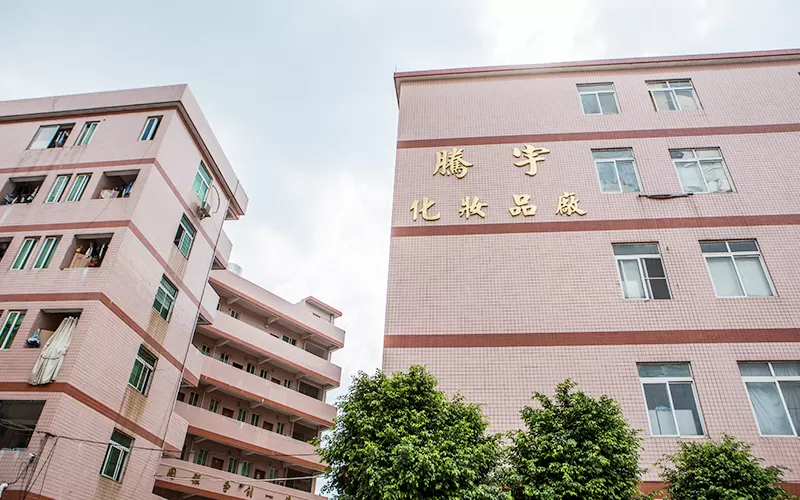
Guangzhou Qiaomei Cosmetics is a personal care manufacturer with a broad product portfolio.
The company reports cosmetics manufacturing experience dating to 2002 and operates in Guangzhou’s Baiyun District, an important center of China’s cosmetics supply chain.
Qiaomei manufactures products across several personal care categories, including facial skincare, body care, haircare, sunscreen, and products for different consumer groups.
This diversity can be useful for brands seeking to consolidate several product lines with one manufacturing partner.
For example, a beauty brand initially offering facial cleansers and moisturizers may later introduce body lotion, shampoo, or other complementary products.
Working with a multi-category manufacturer can potentially simplify supplier communication, quality documentation, and production coordination.
Why brands may consider Qiaomei: It may suit businesses planning multi-category product expansion rather than concentrating on a single specialized skincare technology.
What to check: Confirm the factory’s experience in the exact product categories required and request current supporting documentation for relevant manufacturing standards.
6. Guangzhou Xiran Cosmetics Co., Ltd. (XIRAN Cosmetics)
Location: Guangzhou, Guangdong
Specialization: Skincare, body care, haircare, private label and custom formulation
Website: xirancosmetics.com
Skincare manufacturing: XIRAN Private Label Skincare
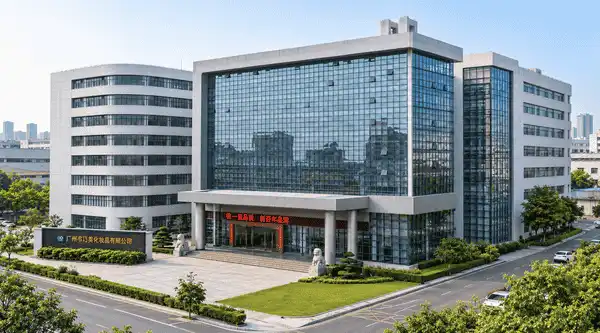
XIRAN Cosmetics is a Guangzhou-based OEM/ODM/OBM cosmetics manufacturer established in December 2013.
Unlike manufacturers focused primarily on very large production programs, XIRAN provides manufacturing and customization services for beauty brands at different stages of development, from initial product launches to the expansion of established skincare collections.
Its manufacturing facility covers approximately 20,000 square meters, with dedicated production equipment, filling and packaging lines, and an internal research and development team.
XIRAN reports more than 10,000 developed formulations across its personal care and cosmetics portfolio.
The company supports product development, formulation selection, packaging sourcing, label customization, sampling, manufacturing, quality control, and export documentation coordination.
For overseas brands, this integrated approach can simplify communication when launching products with multiple packaging components or developing a coordinated skincare collection.
XIRAN reports certifications and audit credentials including ISO 22716, GMPC, BSCI, and SGS-related inspection services. Buyers should request the relevant current documents for their project.
Why brands may consider XIRAN: It is a practical candidate for emerging and growing international skincare brands seeking formulation support, packaging customization, and manufacturing coordination from one supplier.
What to check: Confirm MOQ and quotation details for each product, packaging requirements, formula development scope, samples, and the final documentation needed for the destination market.

7. Guangzhou Yunmei Cosmetics Co., Ltd.
Location: Guangzhou, Guangdong
Specialization: Skincare, body care, OEM/ODM and export-oriented product development
Website: ymcosmetic.com
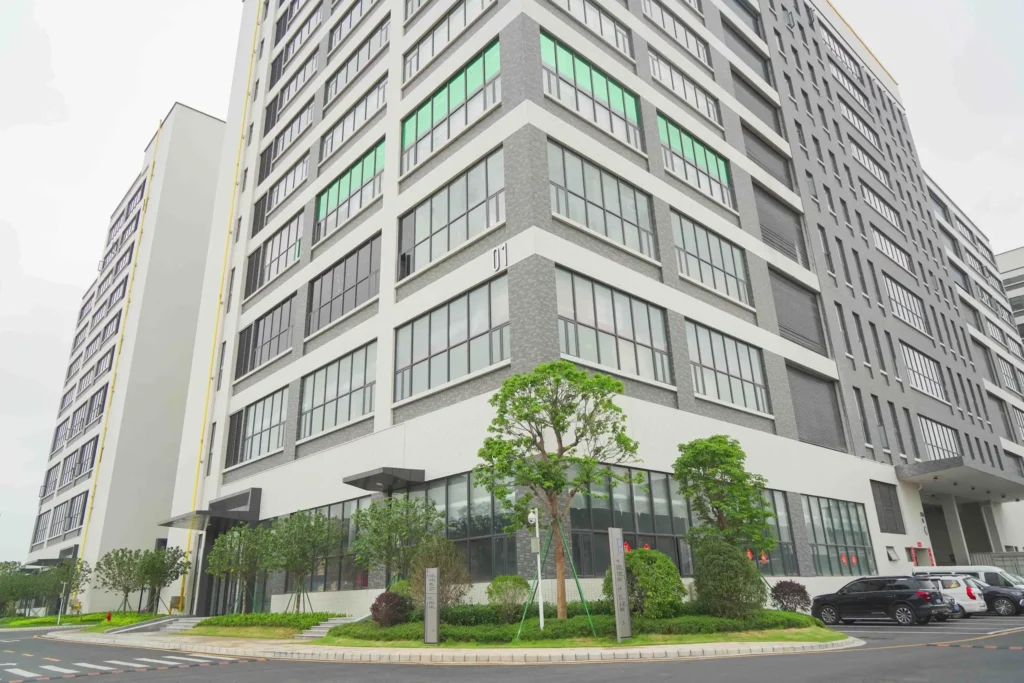
Guangzhou Yunmei Cosmetics is an OEM/ODM manufacturer focused on skincare and related personal care products.
According to its company information, Yunmei has operated since 2005 and reports manufacturing activities across affiliated facilities in Guangzhou.
The company emphasizes formulation research and product development, with publicly stated laboratory and research team capabilities.
Another element of its positioning is assistance with international market requirements.
For brands exporting cosmetics, the complexity often begins after a formula is approved. Ingredient restrictions, product documentation, labeling, and other market-specific requirements can affect both development schedules and production decisions.
Yunmei promotes experience supporting projects intended for different international markets, although the exact scope of such services should be confirmed for each country and product category.
Why brands may consider Yunmei: It is worth evaluating for international skincare brands that want formulation development alongside export-related documentation coordination.
What to check: Confirm which services are handled internally, which involve external testing or regulatory partners, and which factory holds the relevant certificates.
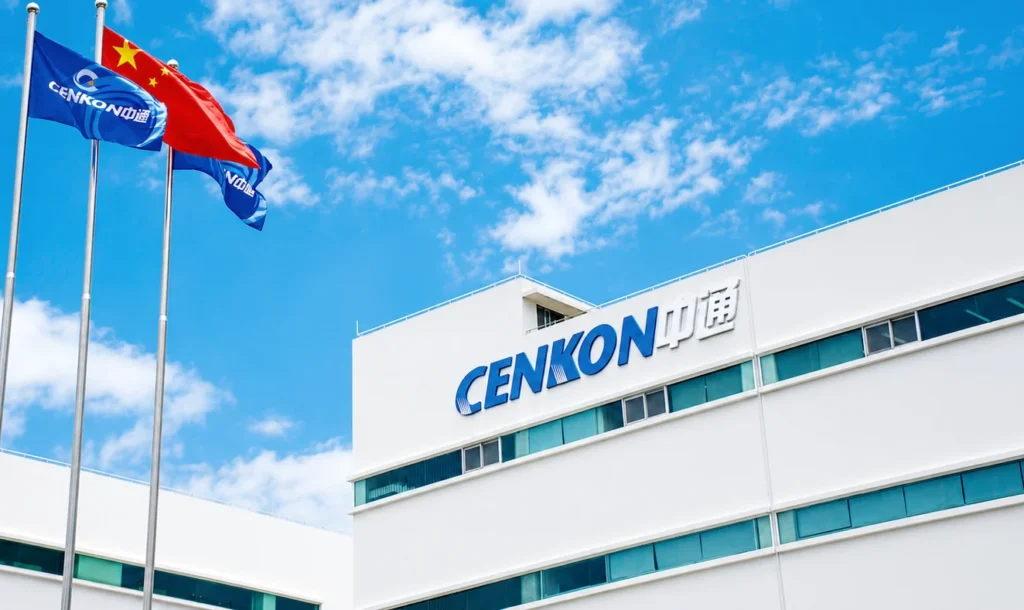
8. Guangzhou Cenkon Biochemical Products Co., Ltd.
Location: Guangzhou, Guangdong
Specialization: Skincare formulation, botanical products, OEM/ODM/OBM
Website: cenkon.com
Guangzhou Cenkon Biochemical Products is an established cosmetics manufacturer with a history dating to 1996.
The company has developed a broad range of cosmetic and personal care formulations, with an emphasis on research, product innovation, and manufacturing technology.
Cenkon reports proprietary formulations, patent-related developments, and international customer experience.
For buyers, proprietary formulation capability is potentially valuable, but it also creates questions around exclusivity.
A manufacturer may offer an existing formula to multiple customers, while a separately developed custom formula may involve different intellectual property and commercial arrangements.
These terms should be clarified before investing in a product that a brand intends to position as distinctive.
Why brands may consider Cenkon: It may suit established skincare brands looking to develop products with particular formulation characteristics or longer-term technical cooperation.
What to check: Clarify formulation ownership, ingredient sourcing, product stability requirements, and whether any claimed technologies are available for exclusive use.
9. Shanghai Zhenchen Cosmetics Co., Ltd. (A&H International Cosmetics)
Location: Shanghai
Specialization: Color cosmetics, skincare, beauty product development
Website: a-hcosmetics.com
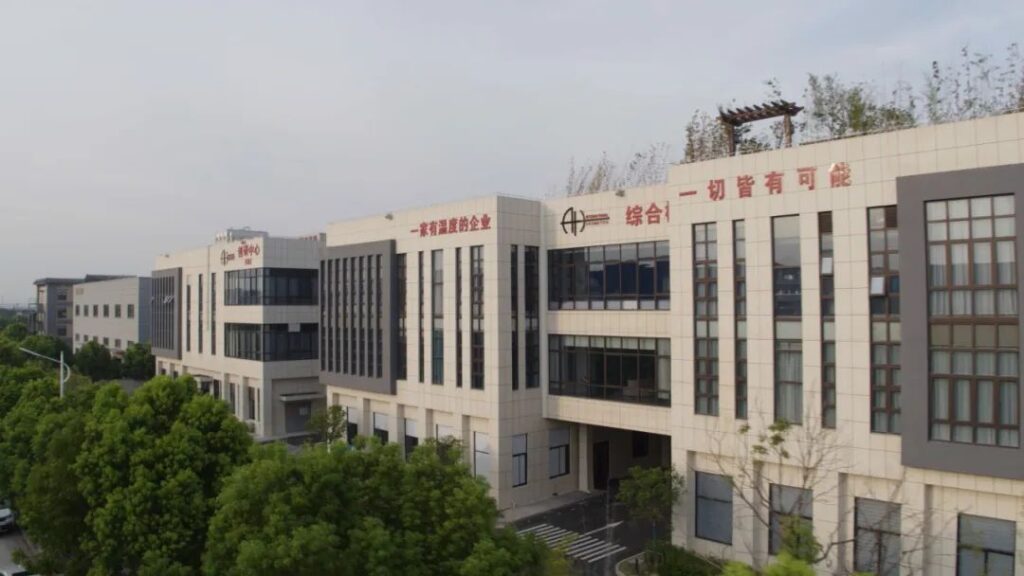
Shanghai Zhenchen Cosmetics operates within the A&H International Cosmetics business and is known for its beauty manufacturing capabilities.
The company has particular experience in color cosmetics while also offering skincare-related manufacturing services.
This combination can be relevant for brands building a broader beauty portfolio.
For example, a company offering foundation, concealer, and other makeup products may want skincare manufacturing support for primers, moisturizers, or complementary products.
A supplier with experience across both categories may help coordinate certain development and manufacturing requirements.
However, expertise in makeup does not automatically mean equal specialization in every skincare format.
Brands developing sophisticated facial skincare should assess the manufacturer’s experience with the particular textures, active ingredients, testing requirements, and production processes involved.
Why brands may consider Shanghai Zhenchen: It may be especially relevant for established beauty brands combining makeup and skincare within the same product portfolio.
What to check: Request examples of comparable skincare products and confirm the manufacturing site, relevant certifications, and development capabilities for the proposed formulas.
10. Jiumei (Guangzhou) Biomedical Co., Ltd. (GZ Cosmetics Lab)
Location: Guangzhou, Guangdong
Specialization: Skincare, body care, haircare, OEM/ODM
Website: gzcosmeticslab.com
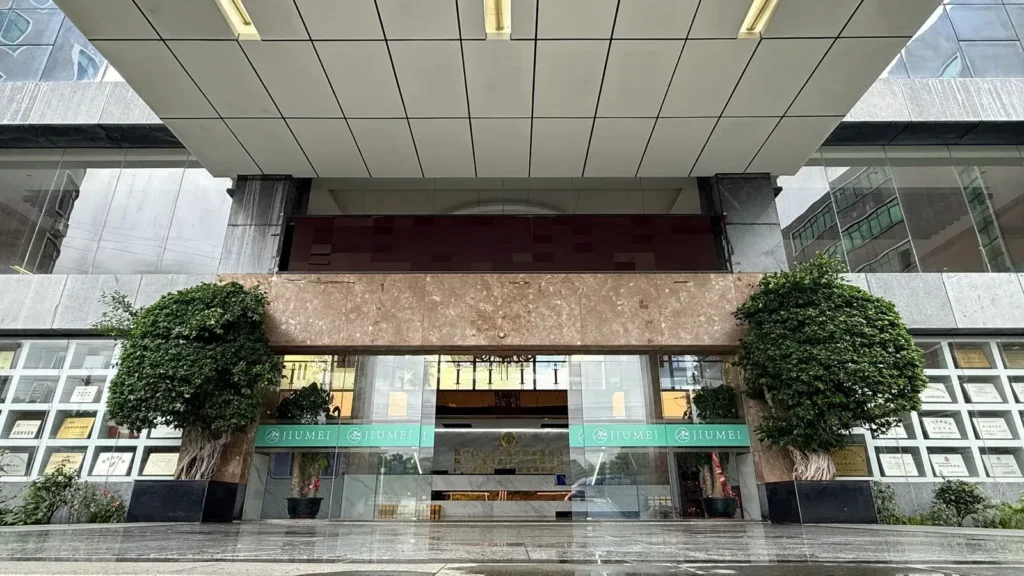
Jiumei Biomedical, also known through GZ Cosmetics Lab, is a Guangzhou cosmetics manufacturer offering private label and contract manufacturing services.
Its published company information describes manufacturing activities dating to 2010 and a production facility in Guangzhou’s Huadu District.
The company provides skincare and personal care manufacturing support, including formulation development, sampling, and finished product production.
A useful feature of its company information is the level of detail it publishes about manufacturing documentation.
The company identifies certification information and references to third-party inspection organizations, which can help potential buyers understand what to request during supplier verification.
However, certificates and factory registrations should always be reviewed for validity, issuing organization, applicable site, and covered activities.
Why brands may consider Jiumei: It may be worth including in a shortlist for international private label skincare projects where clear documentation is an important purchasing requirement.
What to check: Request current certificates, exact production-site information, sample specifications, and product-specific MOQ details.
11. COSMAX China
Location: Shanghai and Guangzhou
Specialization: Global skincare ODM, cosmetic formulation, advanced R&D
Website: cosmax.com.cn
Global website: cosmax.com
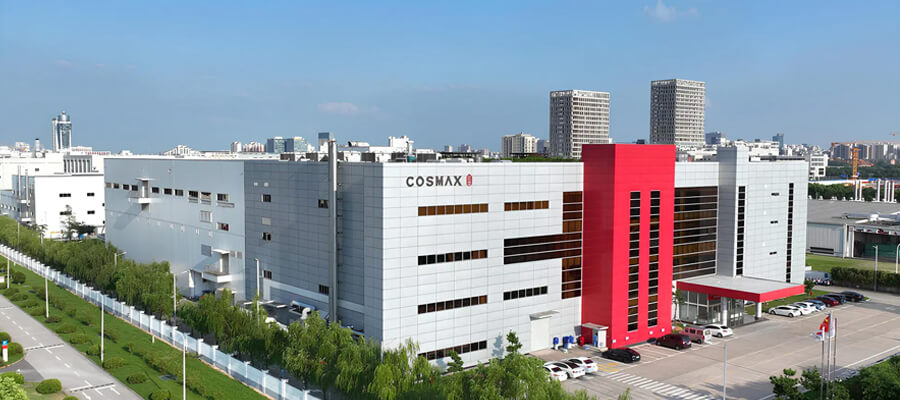
COSMAX is one of the most prominent names in the global cosmetics ODM industry.
Originally established in South Korea, the company has built an international research and manufacturing network serving beauty companies across multiple markets.
Its Chinese manufacturing operations are concentrated in Shanghai and Guangzhou, covering skincare, facial masks, and color cosmetics.
According to the company’s published manufacturing information, its combined annual capacity across its Chinese production network is approximately 1.566 billion units.
That figure represents stated manufacturing capacity rather than actual annual production.
COSMAX’s competitive position is closely connected to its research infrastructure.
The company develops cosmetic formulations, delivery technologies, and product concepts that respond to changing beauty market demand. Its international operations also allow it to draw on formulation and manufacturing experience from different markets.
For established brands, this type of infrastructure can be useful when developing multiple product categories or planning regional product launches.
However, the scale of a large multinational ODM does not automatically make it the best choice for every project.
Why brands may consider COSMAX: It is particularly relevant for large beauty brands seeking advanced formulation research, substantial manufacturing capacity, and international production experience.
What to check: Discuss project qualification, MOQ, development fees, production scheduling, and intellectual property arrangements before beginning technical development.
12. Intercos China
Location: Suzhou and Shanghai
Specialization: Premium cosmetic manufacturing, formulation innovation, skincare and makeup
Website: intercos.com
Intercos is an international cosmetics manufacturing group headquartered in Italy.
Known for working across the beauty industry, the company has an established manufacturing presence in China through facilities in Suzhou and Shanghai.
Its official global manufacturing directory identifies Intercos Technology and Intercos Cosmetics operations in Suzhou, alongside Interfila Cosmetics in Shanghai.
Intercos is especially recognized for its work in color cosmetics, formulation innovation, and the development of products for international beauty markets.
For premium beauty brands, manufacturers with this level of international technical experience may offer advantages in product consistency, specialized manufacturing processes, and managing complex development programs.
However, prospective customers should not assume that every Chinese Intercos facility produces the same categories.
Factory responsibilities, equipment, and technical capabilities can vary by location.
Why brands may consider Intercos: The group is a strong candidate for established and premium beauty companies seeking international manufacturing experience and innovative product development.
What to check: Identify the facility responsible for the target product and confirm its capabilities in skincare rather than relying solely on the group’s broader cosmetics reputation.

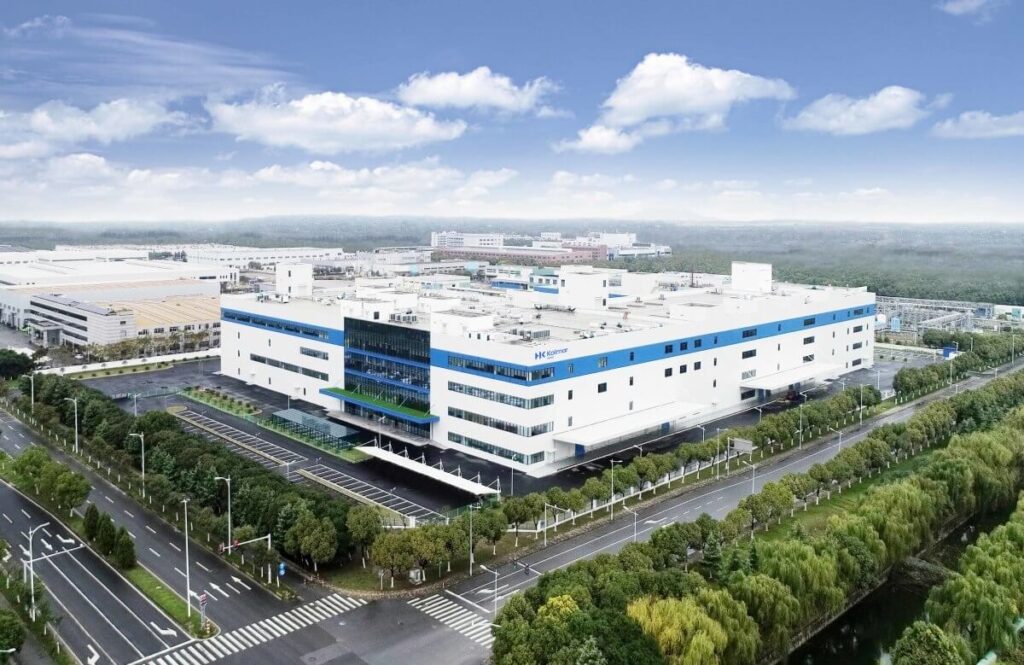
13. Kolmar Cosmetics (Wuxi)
Location: Wuxi, Jiangsu
Specialization: Korean skincare ODM, formulation research, quality management
Website: kolmar.co.kr
Kolmar Korea is an established cosmetics ODM group with manufacturing operations in several countries, including China.
Its Wuxi operation is an important part of its Chinese manufacturing network.
The Wuxi factory began operating in 2018 and has been developed around Kolmar’s research, manufacturing, and quality management experience.
In July 2026, Kolmar reported that its Wuxi factory had received Cosmetic Good Manufacturing Practice recognition from South Korea’s Ministry of Food and Drug Safety.
The company also reported annual manufacturing capacity of approximately 550 million units at the facility.
For international brands interested in K-beauty-inspired skincare, this combination of Korean formulation expertise and Chinese production infrastructure may be attractive.
Brands developing products with advanced textures, specific sensory expectations, or science-led positioning may find particular value in discussing formulation capabilities with an experienced ODM.
Why brands may consider Kolmar Wuxi: It is relevant for established brands seeking Korean ODM technology, consistent manufacturing systems, and large-scale skincare production.
What to check: Confirm whether the desired formulation technology is available through the Wuxi facility and how development fees, exclusivity, and batch sizes are structured.
14. Shandong Freda Biotechnology Co., Ltd.
Location: Jinan, Shandong
Specialization: Hyaluronic acid skincare, biotechnology, functional skincare
Website: biofreda.com
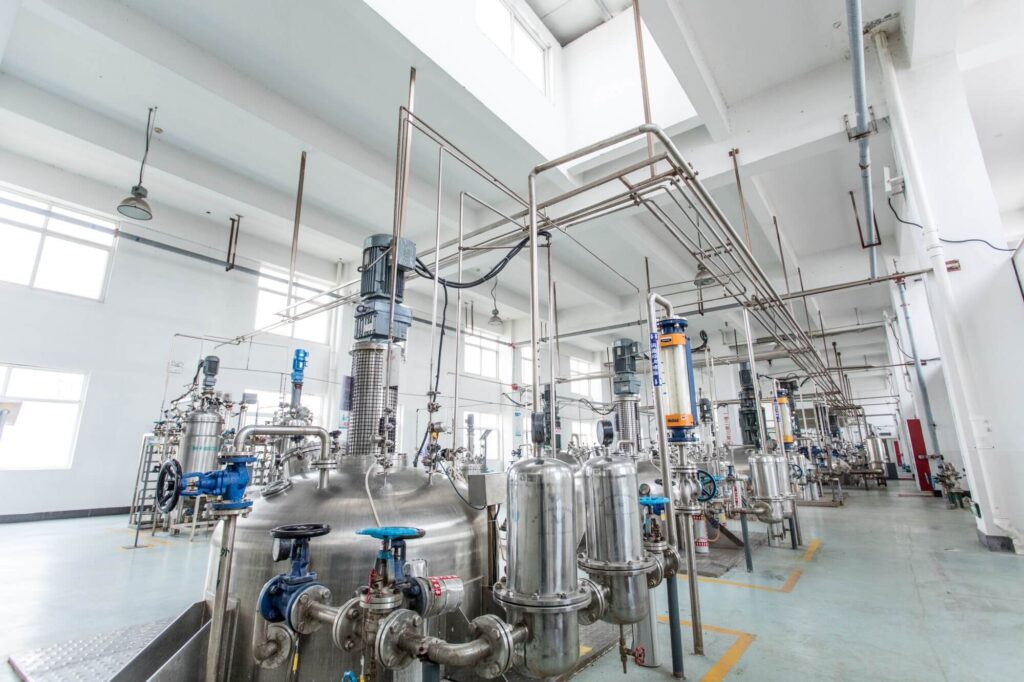
Shandong Freda Biotechnology is a cosmetics business with a particularly strong connection to skincare ingredients and scientific research.
Established in 1998, the company is part of the broader Freda business network and has developed expertise related to hyaluronic acid and other functional skincare technologies.
Its research activities cover areas such as skin hydration, microbiome-related skincare, biotechnology, and specialized ingredients.
This research background is significant because ingredient selection alone does not determine the performance of a skincare product.
A finished formula also depends on stability, ingredient compatibility, delivery systems, texture, and the way the ingredients behave within the overall formulation.
Freda’s corporate information describes research teams, technology platforms, patents, and product development activities connected to its skincare business.
The company’s manufacturing-related materials also describe cosmetic OEM and ODM capabilities.
However, buyers should distinguish between the group’s branded skincare operations and the contract manufacturing services available for external customers.
Why brands may consider Freda: It is worth investigating for brands developing science-led moisturizers, functional skincare, or products built around ingredients such as hyaluronic acid.
What to check: Establish which technologies and formulations are available for external OEM/ODM projects and confirm the responsible manufacturing entity.
15. Guangzhou Ridgepole Biological Technology Co., Ltd.
Location: Guangzhou, Guangdong
Specialization: Botanical skincare, functional cosmetics, OEM/ODM/OBM
Website: ridgepole.com
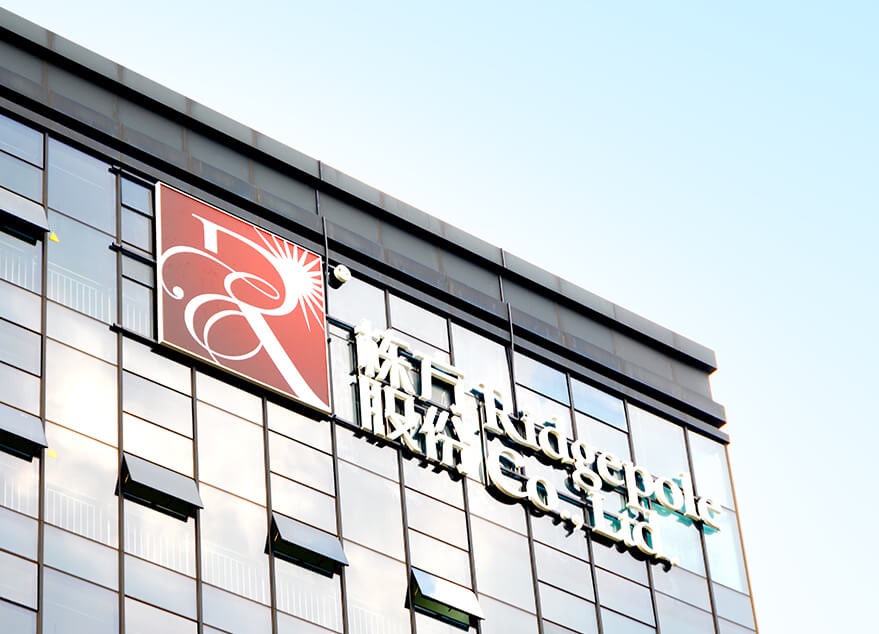
Guangzhou Ridgepole Biological Technology is a cosmetics research and manufacturing company with a strong emphasis on technology-driven product development.
Founded in 1998, the company has expanded into multiple beauty and personal care categories.
Its manufacturing capabilities include skincare, facial masks, cosmetics, personal care, botanical products, and specialized product formats.
Ridgepole’s official materials describe an extensive formulation library, technology research platforms, and a large digital manufacturing facility.
The company also highlights work in botanical extraction, microbial fermentation, and ingredient-related technologies.
These areas are particularly relevant for beauty brands trying to differentiate their products through formulation concepts rather than packaging alone.
Another feature of the company’s operations is its associated testing business, which provides technical services connected to cosmetic product evaluation.
Why brands may consider Ridgepole: It may suit skincare brands interested in botanical ingredients, functional formulations, distinctive product concepts, or research-oriented development.
What to check: Ask which reported technologies are commercially available, whether exclusive development is possible, and what testing supports proposed product claims.
16. Guangdong Behao Biotechnology Co., Ltd.
Location: Foshan, Guangdong
Specialization: Facial masks, mask materials, skincare OEM/ODM
Website: gdbeihao.com
Guangdong Behao Biotechnology focuses strongly on facial mask development and manufacturing.
The company traces its history to 1987 and is associated with innovation in facial mask materials and product formats.
Its official website describes a specialization in high-end masks and reports manufacturing experience serving hundreds of beauty brands.
For brands developing masks, the technical details of the mask material can be just as important as the serum.
Different substrates affect fit, serum retention, skin contact, perceived quality, and the overall consumer experience.
A specialist manufacturer such as Behao may therefore offer a different type of value compared with a general cosmetics factory that simply includes sheet masks in a much larger product portfolio.
Behao also promotes OEM/ODM services and product development support.
Why brands may consider Behao: It is a relevant candidate for skincare companies developing specialized facial mask collections or looking for distinctive mask materials.
What to check: Request samples of different mask materials, confirm the available production formats, and compare material performance as well as the finished formula.

17. Jahen Household Products Co., Ltd.
Location: Fujian, with manufacturing operations also associated with Jiangsu
Specialization: Cosmetics manufacturing, personal care, plastic packaging
Website: jahenjh.com
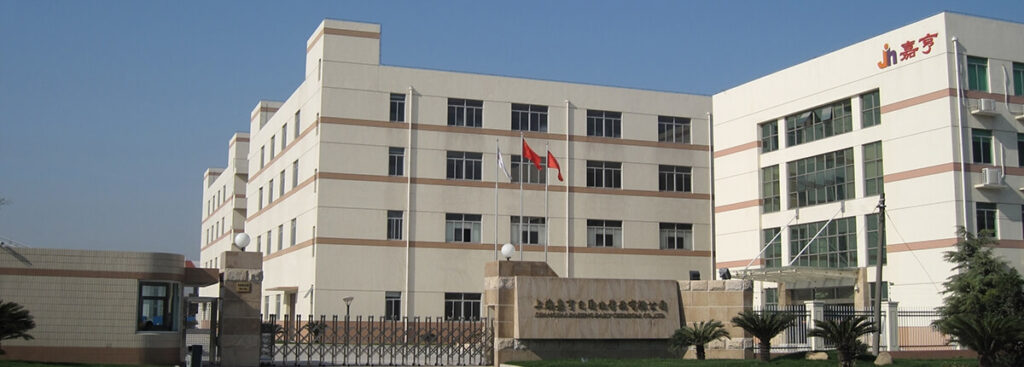
Jahen Household Products is a Chinese manufacturer offering cosmetics and personal care production together with plastic packaging manufacturing capabilities.
The company is listed on the Shenzhen Stock Exchange under stock code 300955.
Its publicly available annual reporting describes two connected business areas: OEM/ODM production of cosmetics and household care products, and the development and manufacture of plastic packaging containers.
This combination is particularly relevant for brands with significant packaging requirements.
For many skincare projects, the container is not a small detail added at the end. Bottle compatibility, decoration processes, leakage prevention, filling efficiency, and component lead times can affect the entire production schedule.
A manufacturer with experience in both finished formulations and packaging may be able to coordinate these requirements more efficiently.
Jahen’s disclosed product categories include skincare, personal care, and related products.
Why brands may consider Jahen: It may be suitable for established businesses looking for integrated cosmetics and packaging manufacturing, especially for recurring production programs.
What to check: Confirm which packaging components are manufactured internally, which are externally sourced, and the minimum order quantities for both packaging and finished products.
18. Guangzhou Yachun Cosmetics Manufacturing Co., Ltd.
Location: Guangzhou, Guangdong
Specialization: Professional skincare, functional cosmetics, OEM/ODM/OBM
Website: bc2000.cn
Guangzhou Yachun Cosmetics Manufacturing is associated with Allan International Group, which traces its beauty industry development to 1992.
The business has a background in professional skincare and cosmetics manufacturing, particularly products developed for beauty salons and professional beauty channels.
Its manufacturing services extend across skincare and other cosmetics categories.
Professional beauty products often have different commercial requirements from products developed exclusively for online retail.
Salon-oriented brands may place greater emphasis on coordinated treatment ranges, product textures, professional application methods, and a consistent experience across multiple products.
Yachun’s manufacturing background makes it worth considering for businesses operating in these channels.
The company also promotes broader cosmetics development and manufacturing services through its group operations.
Why brands may consider Yachun: It may appeal to professional skincare brands, salon suppliers, and beauty businesses developing coordinated treatment-oriented skincare ranges.
What to check: Confirm the precise manufacturing entity, the current production facilities, and the documentation supporting any specialized product claims.

19. Opal Cosmetics (Huizhou) Co., Ltd.
Location: Huizhou, Guangdong
Specialization: Body care, haircare, personal care manufacturing
Website: opalhk.com
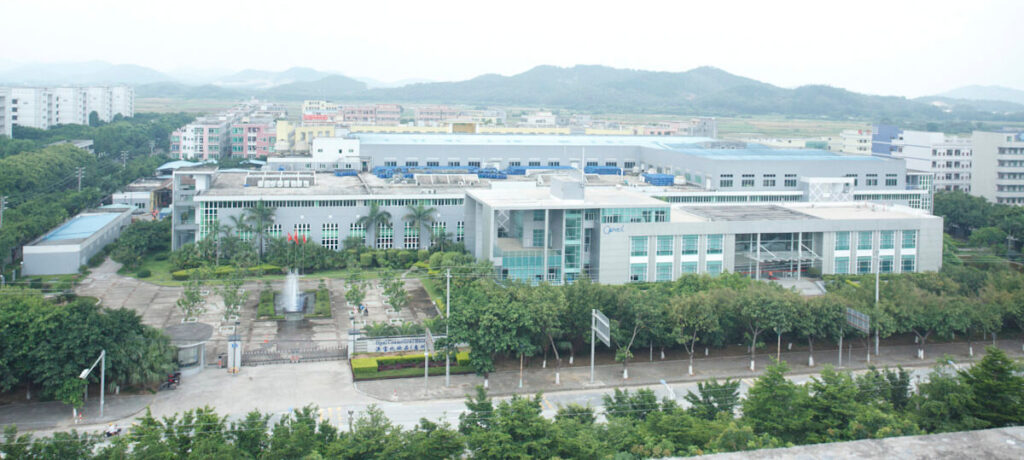
Opal Cosmetics is an established personal care manufacturer with operations in Huizhou, Guangdong.
The company is part of a Hong Kong-headquartered cosmetics group with experience in both proprietary branded products and contract manufacturing.
Its core manufacturing categories include body care, haircare, and related personal care products.
Opal’s business model is particularly relevant for buyers whose product strategy extends beyond facial skincare.
For example, an international distributor may be interested in developing body wash, body lotion, shampoo, and complementary products under a single private label brand.
These categories require reliable formulation, filling, packaging, and quality management systems, particularly when orders involve multiple product types or repeated shipments.
Opal’s published corporate information describes integrated manufacturing, research, and export-related activities.
Why brands may consider Opal: It may suit established personal care brands, distributors, and businesses building body care or haircare product collections.
What to check: Confirm the facility’s current capabilities for facial skincare if that is the primary requirement, rather than assuming all categories receive equal emphasis.
20. Guangzhou Missjoy Biotechnology Co., Ltd.
Location: Guangzhou, Guangdong
Specialization: Skincare formulation, functional cosmetics, OEM/ODM
Website: missjoy.cn
Guangzhou Missjoy Biotechnology is a cosmetics OEM/ODM manufacturer based in Guangzhou’s Panyu District.
The company provides formulation development, cosmetics manufacturing, and related product services.
Its published company information describes a production base covering nearly 30,000 square meters and operations involving research, production, quality control, purchasing, and other manufacturing functions.
Missjoy promotes products across facial skincare, body care, and personal care categories.
The company also discusses formulation research relating to different consumer needs and international markets.
For smaller beauty brands, this type of manufacturer may be worth considering when looking for established formulation options alongside customized product development.
However, buyers should evaluate technical capability through actual samples and project documentation rather than promotional descriptions alone.
Why brands may consider Missjoy: It may be suitable for private label skincare businesses and beauty brands exploring functional skincare or customized personal care products.
What to check: Confirm sample development procedures, available formulas, product-specific manufacturing capability, and the current certification status of the factory.

Which Skincare Manufacturer Is Best for Your Beauty Brand?
There is no universal best manufacturer.
A supplier that performs exceptionally well for one beauty company may be unsuitable for another because of differences in order size, product categories, formulation complexity, budget, or target market.
The most effective approach is to begin with your project requirements and work backward to the manufacturers most likely to meet them.
Best for Large-Scale International Skincare Programs
Manufacturers to investigate: COSMAX, Kolmar, Intercos, Nox Bellcow.
These companies have established manufacturing systems, specialized technical experience, or substantial production networks.
They are relevant for brands planning larger product portfolios, recurring production, or more complex research and development programs.
However, smaller projects should confirm commercial eligibility before spending time on detailed formulation discussions.
Best for Startup and Growing Beauty Brands
Manufacturers to investigate: XIRAN Cosmetics, TY Cosmetic, Qiaomei Cosmetics, Ausmetics, Missjoy.
Startups often face a different set of challenges from established beauty companies.
They need to manage initial investment, limit unnecessary product complexity, choose commercially viable packaging, and obtain samples that accurately represent the intended finished products.
For these buyers, flexibility and clear communication may be more important than maximum production capacity.
Ask whether the manufacturer offers established formulations with existing packaging options, and how minimum order quantities change when customization is introduced.
Best for Science-Led and Functional Skincare
Manufacturers to investigate: Shandong Freda, Bawei, Ridgepole, Cenkon.
These companies emphasize research, formulation development, proprietary technologies, or supporting testing services.
They may be relevant to brands developing functional skincare based on hydration, barrier care, skin comfort, or other measurable cosmetic benefits.
However, an impressive ingredient story is not the same as evidence that a finished product delivers a particular result.
Ask what testing has been conducted on the finished formulation and whether the available evidence supports the exact claims you intend to publish.
Best for Facial Mask Manufacturing
Manufacturers to investigate: Nox Bellcow, Guangdong Behao, COSMAX.
Specialized mask manufacturing involves raw materials, substrate selection, formulation compatibility, filling, sealing, and preservation.
For mask-focused brands, it is worth comparing specialized manufacturers rather than evaluating factories solely on unit price.
A less expensive mask may perform differently because of substrate quality, serum retention, or packaging specifications.
Best for Body Care and Multi-Category Expansion
Manufacturers to investigate: Opal, Qiaomei, Jahen, XIRAN Cosmetics.
Brands expanding into body care, haircare, and complementary personal care products may benefit from manufacturers experienced across several categories.
The objective is not simply to reduce the number of suppliers.
It is to maintain consistent product quality, coordinate packaging, simplify documentation, and keep future product expansion manageable.
OEM vs. ODM vs. Private Label Skincare Manufacturing
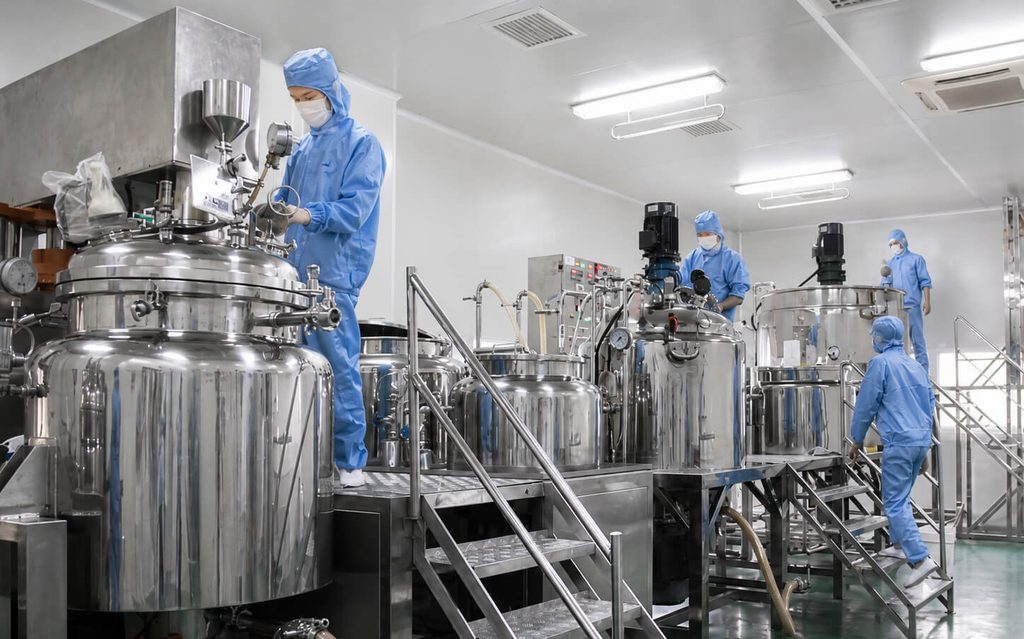
These terms appear on almost every Chinese cosmetics factory website, but they do not always describe identical services.
Understanding the differences will help you ask better questions and compare quotations more accurately.
| Manufacturing Model | What It Generally Means | Best For |
|---|---|---|
| OEM | Manufacturing products according to agreed customer specifications | Brands with defined product requirements |
| ODM | Manufacturer contributes to formulation or product development and production | Brands needing technical development support |
| Private Label | Products are marketed under the buyer’s brand, often using an established formula | Faster launches and simpler customization |
| OBM | Manufacturer develops and markets its own brand | Manufacturer-owned product businesses |
The boundaries are not always rigid.
A manufacturer may offer an existing formula with customized packaging while also providing completely custom formulation development for another customer.
The commercial terms can differ substantially.
If you are evaluating formulation options, our guide to custom cosmetic formulations explains how development choices can influence product differentiation and manufacturing requirements.
How Much Does It Cost to Manufacture Skincare in China?
There is no single reliable manufacturing price for skincare products in China.
The cost of a moisturizer, serum, cleanser, or facial mask depends on several interacting factors.
Two facial serums of the same volume may have very different costs because of their formulations, packaging, ingredient sourcing, testing requirements, and production quantities.
1. Formula and Ingredients
An established formula may reduce initial research costs compared with developing a new product.
Specialized active ingredients, proprietary materials, certain fragrance systems, and complex textures may increase raw material and testing expenses.
2. Packaging Selection
Standard packaging can help reduce development time and minimum quantities.
Custom molds, special surface finishes, exclusive bottle colors, and complex decoration can significantly change the project budget.
For additional guidance, see our article on cosmetic packaging services.
3. Minimum Order Quantity
MOQ requirements vary by manufacturer and product category.
For example, some skincare factories may support projects beginning around 1,000 units per SKU when using established formulations and existing packaging components.
Other manufacturers may require substantially larger orders, especially for specialized packaging or high-volume production systems.
Never assume that a factory’s advertised MOQ applies to every product.
Our guide to cosmetics MOQ explains how product type and customization affect minimum quantities.
4. Testing and Regulatory Requirements
Different export markets may require additional documentation, testing, safety assessment, labeling review, or product notification.
These costs should be considered before comparing final manufacturing quotations.
5. Logistics and Delivery Terms
Unit manufacturing cost is only part of the total landed cost.
Freight, customs clearance, import duties, insurance, and delivery arrangements can affect the final price paid by the importer.
For a meaningful comparison, ask shortlisted suppliers to quote against the same product specifications and commercial terms.
How to Verify a Skincare Manufacturer in China
A professional website and attractive product catalog are useful starting points, but they cannot replace supplier verification.
Before proceeding with a significant order, brands should review the following areas.
Manufacturing Identity
Confirm the full legal company name, manufacturing address, business license, and the entity responsible for production.
If a manufacturing group operates several factories, identify which location will produce your specific products.
Factory Certifications
Depending on the project, relevant information may include ISO 22716, GMPC-related audits, quality management certifications, and other applicable documentation.
Request current certificates and verify their scope, dates, and issuing bodies.
A certificate held by one plant or group company should not automatically be treated as covering every manufacturing location.
Product Testing
Discuss the testing required for the finished product.
Depending on the formulation and market, relevant tests may include stability, packaging compatibility, microbial quality, preservation effectiveness, and product safety assessments.
For performance-related marketing claims, ask what evidence supports those claims.
Formula Ownership
If the manufacturer develops a custom formulation, clarify whether your brand receives exclusive rights, restricted rights, or access to a formulation that the manufacturer can also offer to other customers.
These arrangements should be documented in the contract.
Sampling and Production Consistency
A sample is useful only if it represents the product that can be manufactured consistently at commercial scale.
Ask whether there may be differences between laboratory samples, pilot batches, and mass-production batches.
Agree on the approved reference sample and the procedure for handling manufacturing changes.
What Should Overseas Brands Know About Skincare Compliance?
Manufacturing a product in China does not automatically make that product compliant with the rules of its destination market.
Brands should establish regulatory requirements early, ideally before approving the final formula and packaging.
United States
The U.S. Modernization of Cosmetics Regulation Act of 2022 (MoCRA) introduced requirements covering cosmetic facility registration, product listing, and other aspects of cosmetic safety and oversight, subject to applicable exemptions.
Importantly, FDA facility registration is not FDA approval.
In September 2026, the FDA explicitly clarified that it does not issue certificates verifying cosmetic facility registration or cosmetic product listing.
Brands can review the official requirements through the FDA’s cosmetics registration and listing guidance.
Additional rules may apply to products regulated as drugs, such as certain sunscreen products.
European Union
For the EU market, cosmetic products generally require a designated Responsible Person, appropriate safety assessment, a Product Information File (PIF), and notification through the Cosmetic Products Notification Portal (CPNP), among other requirements.
Your manufacturer can provide essential technical documentation, but the legal responsibilities of the EU Responsible Person must still be addressed.
United Kingdom
Great Britain has its own cosmetic regulatory framework, including Responsible Person arrangements and product notification requirements.
Brands should confirm which regulations apply to the exact intended market rather than assuming EU and UK procedures are identical.
Other Export Markets
Requirements may also differ across Canada, Australia, the Middle East, and Southeast Asia.
Before finalizing a product, provide your manufacturer with the intended sales countries and ask which regulatory documents it can supply.
Questions to Ask Before Choosing a Chinese Skincare Factory
Before requesting samples or negotiating prices, prepare a simple product brief and send the same questions to each shortlisted supplier.
- Do you manufacture this exact product category in your own production facility?
- What is the MOQ per SKU for an established formula with existing packaging?
- What changes if we require exclusive packaging or a custom formula?
- Can you provide formulation development and technical support?
- What sample types, charges, and development timelines apply?
- What stability, microbial, and compatibility tests are included?
- Which manufacturing certifications apply to the production site?
- Can you provide the documentation needed for our destination market?
- How do you manage ingredient substitutions and production changes?
- What is the expected manufacturing lead time after final approval?
- Who owns any custom formulation, packaging artwork, or tooling?
- How are production defects, quality disputes, and replacement orders handled?
A manufacturer that answers these questions clearly gives you a stronger basis for comparison than one that provides only a low unit price.
How to Narrow 20 Manufacturers Down to the Right Three
Twenty manufacturers are useful for market research, but contacting all of them with the same generic inquiry may not be the most effective use of your time.
A more practical approach is to narrow the list in stages.
First, select by product category. A specialist facial mask manufacturer and a broad personal care factory may have very different advantages.
Second, eliminate unsuitable production models. If your initial order is relatively small, confirm MOQ requirements before discussing complex development ideas.
Third, compare technical capabilities. Ask for evidence of experience with formulations similar to the products you want to launch.
Fourth, request comparable quotations. Give manufacturers the same fill volume, packaging requirements, target market, and expected quantity.
Finally, evaluate samples and communication. Product consistency, technical explanations, realistic timelines, and responsive service matter throughout a manufacturing relationship.
The strongest supplier is not necessarily the one with the largest factory or the lowest quotation.
It is the manufacturer that can consistently produce the product your brand needs, at a commercial scale your business can sustain.
About Xijing Biotech
Xijing Biotech is a Hong Kong-based cosmetics manufacturing and product development company serving international beauty businesses.
With manufacturing operations in China and research and development capabilities, Xijing provides OEM/ODM skincare manufacturing services covering product formulation, sampling, packaging customization, quality management, and commercial production.
The company supports beauty brands developing private label skincare collections and customized products, helping translate product concepts into manufacturable solutions.
Its services cover formulation and product development, packaging selection, manufacturing arrangements, and preparation for international distribution.
Whether a brand is introducing its first skincare collection or expanding an existing product portfolio, Xijing works with customers to determine suitable manufacturing specifications and customization options.
Explore our private label cosmetics services to learn more about the available development and manufacturing approaches.

Final Thoughts: Choosing the Right Skincare Manufacturer in China
China offers a wide range of skincare manufacturing partners, but the companies in this guide do not all compete on the same strengths.
COSMAX, Intercos, and Kolmar bring international ODM experience and substantial technical infrastructure. Nox Bellcow and Behao stand out for their focus on facial masks. Freda and Ridgepole emphasize research and skincare technologies, while manufacturers such as XIRAN, TY Cosmetic, Ausmetics, and Qiaomei offer different approaches to private label and customized cosmetics manufacturing.
For international beauty brands, the most important question is not which company appears first on a list.
It is whether the manufacturer understands your product requirements, order quantities, quality expectations, target market, and long-term business plans.
A good manufacturing relationship begins with clear specifications, realistic expectations, and transparent communication.
Planning to launch or expand your skincare brand?
Contact Xijing Biotech to discuss your skincare product concept, formulation requirements, packaging preferences, target market, and estimated order quantity.
Our team can help you explore suitable OEM/ODM manufacturing solutions for your next skincare collection.